
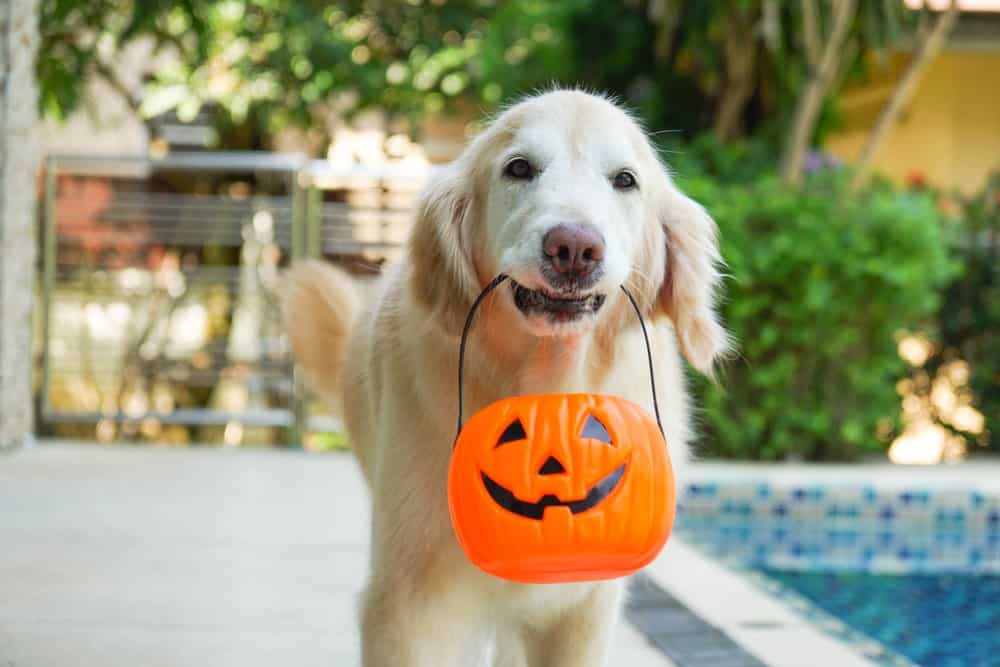
Chocolate, xylitol, raisins and candy wrappers can turn Halloween into an emergency. Know the biggest Halloween food dangers for dogs.
Your Dog Has No Idea That Candy Is “Not for Dogs”
To your dog, Halloween is essentially Christmas morning except everyone is carrying tiny bags of things that smell fantastic.
The bowl of candy on the counter?
Interesting.
The child’s trick-or-treat bucket?
Extremely interesting.
The wrapper that fell underneath the couch?
A Michelin-starred delicacy, apparently.
Unfortunately, several common Halloween treats can be dangerous or toxic to dogs. Chocolate and xylitol-containing products are among the biggest concerns, and wrappers can create their own problems. The ASPCA helps lay out what is safe and what is NOT. The safest option is to do your research before guessing.
So let’s talk about the Halloween candy your dog absolutely does not need to sample.
Chocolate: The Classic Halloween Problem
Chocolate contains methylxanthines, including theobromine and caffeine, which can be toxic to dogs.
The risk depends on several factors, including:
- The type of chocolate
- The amount eaten
- The dog’s size
- The concentration of methylxanthines

Darker chocolate and baking chocolate generally contain higher concentrations than milk chocolate.
Possible signs of chocolate poisoning can include vomiting, diarrhea, restlessness, abnormal heart rhythms, tremors and seizures.
If your dog eats chocolate, don’t wait for symptoms before seeking professional guidance.
Contact your veterinarian, emergency veterinary clinic or a pet poison service promptly.
Sugar-Free Candy Has a Different Problem
“Sugar-free” does not mean “dog-friendly.”
Some sugar-free candies, gum and other products contain xylitol, a sweetener that is toxic to dogs.
Xylitol can cause a rapid drop in blood sugar and, depending on the exposure, potentially severe liver injury.
Signs can include:
- Vomiting
- Weakness
- Lack of coordination
- Lethargy
- Tremors
- Seizures
Pet Poison Helpline notes that xylitol-related low blood sugar can occur very quickly.
If your dog may have eaten something containing xylitol, treat it as an urgent veterinary issue.
Read the ingredient label.
And don’t assume the package saying “healthy,” “natural” or “sugar-free” makes it safe for the family dog.
Raisins and Grapes Don’t Get a Pass
Chocolate gets most of the Halloween attention, but raisins can also be dangerous to dogs.
Raisins may appear in certain candies, baked goods or snack mixes.
Grapes and raisins can cause kidney injury in dogs, and the amount that produces toxicity isn’t reliably predictable.
The safest rule is remarkably simple:
If your dog eats grapes or raisins, call your veterinarian.
Don’t wait to see whether they’re “fine.”
The Wrapper Is Not a Treat Either
Dogs don’t always stop after eating the candy.
They may eat the wrapper.
That creates a separate concern: gastrointestinal obstruction.
Foil, plastic, paper and other packaging can become problematic if swallowed, particularly when a dog eats a large quantity.
This is another reason the candy bowl belongs somewhere your dog cannot reach.
Not “somewhere you think your dog can’t reach.”
Somewhere they actually cannot reach.
Because your Labrador has spent years studying your weaknesses.
Halloween Candy Safety Starts Before the Candy Comes Home
The easiest poisoning emergency to manage is the one that never happens.
The ASPCA recommend that pet owner’s designate a secure place for Halloween candy.
That might be:
- A high cabinet
- A closed pantry
- A sealed container
- A room behind a baby gate
- A locked cupboard
Don’t leave candy sitting on coffee tables, kitchen counters or children’s bedroom floors.
Also teach children that sharing candy with the dog is not kindness.
The dog already has a perfectly acceptable diet.
What If Your Dog Gets Into the Candy?
 First, don’t panic.
Second, don’t guess.
Collect the packaging and determine:
- What product was eaten?
- How much is missing?
- What ingredients does it contain?
- When did the ingestion occur?
- How much does your dog weigh?
Then contact your veterinarian or a pet poison service.
Do not induce vomiting unless a veterinary professional specifically instructs you to do so.
For chocolate exposure, Poison Control specifically recommends getting professional help promptly because treatment may need to begin quickly.
Give Your Dog Their Own Halloween Treat
There is absolutely no reason your dog has to spend Halloween feeling deprived.
Give them a dog-safe treat instead.
You can also use:
- A favorite chew
- A food puzzle
- A stuffed enrichment toy
- A small portion of their regular treats
- A veterinarian-approved special snack
The important part is that the treat is actually appropriate for dogs.
Because “but he really wanted the Reese’s” is not a veterinary nutrition plan. Check out our blog on safe & approved human food options to feed your pup this season!
Keep the Candy for the Humans
Halloween is supposed to be fun.
With a little planning, your dog can enjoy the holiday without participating in the annual family tradition of “How Quickly Can We Get to the Emergency Vet?”
Keep candy secured. Know the major toxins. Supervise children. And if your dog does get into something questionable, call for professional guidance rather than waiting for symptoms.
If Halloween at your house becomes a little too chaotic for your dog, Dog Day Getaway in Apple Valley offers daycare and boarding where dogs can spend the day playing, socializing and getting attention while their humans handle the candy-fueled chaos.
Because sometimes the safest Halloween treat is simply not being invited to the candy party.