
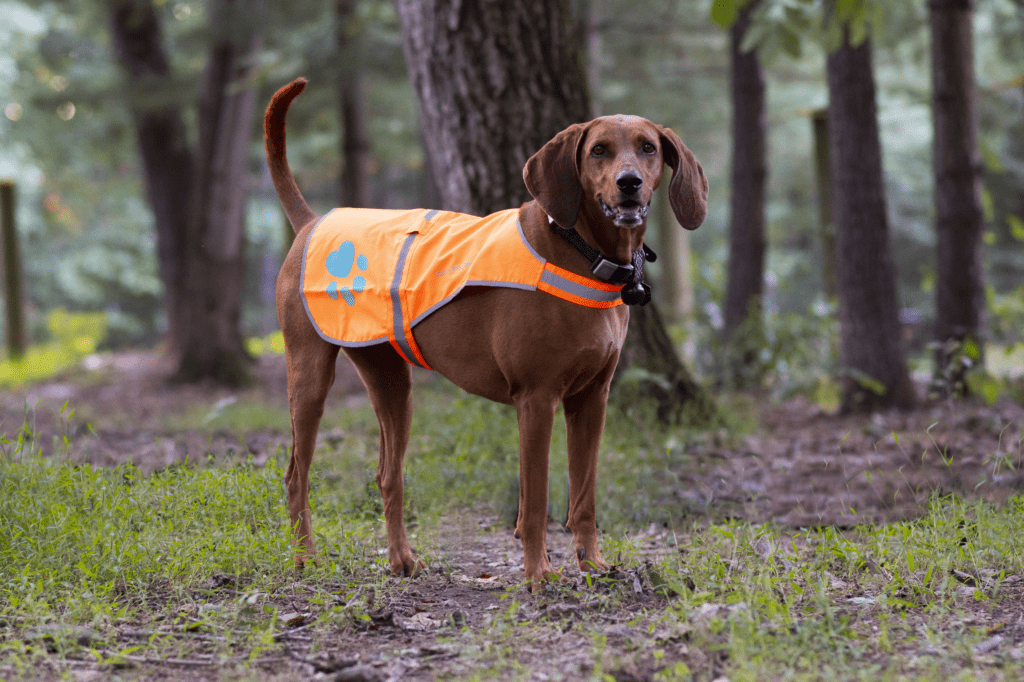
Minnesota hunting season is here. Learn how Dakota County dog owners can safely walk, hike and explore with dogs during hunting season.
Fall Hiking Comes With a New Rule: Know What’s Happening in the Woods
Minnesota fall is hard to beat.
Cool temperatures. Brilliant leaves. Fewer mosquitoes. Dogs suddenly have enough energy to power a small municipality.
But fall also means hunting seasons are underway across Minnesota, including in and around Dakota County.
Minnesota’s 2026 archery deer season runs statewide from September 19 through December 31. Firearms seasons begin in November, with specific dates depending on the permit area, and Dakota County also has a special deer hunt scheduled at Miesville Ravine Park Reserve in November.
That doesn’t mean you need to stop enjoying the outdoors with your dog.
It does mean it’s time to become a little more deliberate about where and when you walk.
Hunting Season Isn’t Just One Weekend
 One of the easiest mistakes dog owners can make is thinking hunting season begins and ends with the traditional November firearms opener.
It doesn’t.
Minnesota’s 2026 archery deer season is already underway in October and continues through the end of December.
Other hunting seasons also overlap the fall months, including small-game seasons. The Minnesota DNR notes that, in most instances, small-game hunters must wear visible blaze orange or blaze pink above the waist.
The practical takeaway for dog owners is simple:
Know the area you’re visiting and check current Minnesota DNR regulations before heading out.
Visibility Matters for Dogs, Too
You may be wearing a dark jacket.
Your dog may be wearing a dark collar.
The woods may be full of brown leaves.
This is not the season to make your dog visually disappear into the scenery.
A brightly colored or blaze-orange dog vest can make your dog significantly easier to spot.
Consider high-visibility gear such as:
- Blaze-orange vest
- Bright harness
- Reflective collar
- Reflective leash
- LED light for low-light walks
Visibility doesn’t replace control, but it adds another layer of safety.
Keep Your Dog Under Control
Minnesota DNR rules for wildlife management areas state that dogs must be accompanied by or under the control of their owner.
During hunting season, “under control” should mean more than your belief that your dog would probably come back eventually.
If your dog has a strong prey drive, unreliable recall or a tendency to chase wildlife, a leash is the obvious choice.
Even excellent recall isn’t a substitute for good judgment when you’re sharing public land with hunters.
A deer appears.
Your dog sees deer.
Your dog suddenly remembers that they have always dreamed of becoming a professional athlete.
That’s not the moment to discover your recall training needs work.
Consider Where You’re Walking
If you’re heading to a trail, wildlife management area or wooded park, check whether hunting is permitted there and whether special regulations apply.
The Minnesota DNR provides hunting-land information and regulations online.
Also remember that individual parks, wildlife areas and properties can have their own rules.
If you aren’t sure, choose a well-populated urban trail or another area where hunting isn’t occurring.
There is nothing cowardly about choosing the path with fewer firearms.
Early Morning Isn’t Always the Best Time
 Many dog owners prefer early-morning walks.
During hunting season, however, low-light hours can reduce visibility for everyone.
If you’re walking near hunting areas, consider choosing daylight hours and wearing high-visibility gear.
You don’t need to turn your dog’s morning walk into a neon fashion show.
But a little visibility is an excellent idea.
Don’t Assume Your Dog Will Understand the Difference
Your dog does not know that a hunter is hunting.
They know that the woods contain exciting smells.
That deer smells interesting.
That movement over there is extremely interesting.
And that you are apparently taking entirely too long to allow them to investigate it.
This is why leash control and recall matter.
A dog chasing wildlife can travel much farther than expected and may encounter roads, unfamiliar terrain, other dogs, traps or other hazards.
Hunting Dogs Are Not the Only Dogs at Risk
You don’t have to be hunting with your dog for hunting-season precautions to matter.
A family hiking with a pet can accidentally wander into an active hunting area.
That is why checking the location before you go is worthwhile.
Minnesota DNR information can help you determine where hunting is allowed, what seasons are open and what clothing requirements apply to hunters.
If you’re visiting Dakota County parks, check the specific property information as well.
A Simple Fall Safety Checklist
Before heading into the woods, ask:
- Is hunting allowed here?
- What seasons are currently open?
- Is my dog wearing something highly visible?
- Is my dog’s identification information current?
- Do I have a leash?
- Is my recall reliable enough for this environment?
- Is there another trail that would be safer?
Five minutes of planning can prevent a very unpleasant afternoon.
Enjoy Fall—Just Know the Rules
 Hunting season doesn’t mean your dog has to spend autumn staring sadly through the window.
It means dog owners need to understand that public outdoor spaces may be shared by hikers, wildlife, hunters and dogs.
Be visible. Stay aware. Keep your dog under control. Check Minnesota DNR regulations before heading out.
And if you’d rather let your dog burn off some energy somewhere that doesn’t involve wondering whether the person in the woods has a bow, Dog Day Getaway offers supervised daycare in Apple Valley with indoor and outdoor spaces.
Come see us for a tour and learn more about how your dog can get plenty of exercise and social time while you handle the rest of your fall calendar.